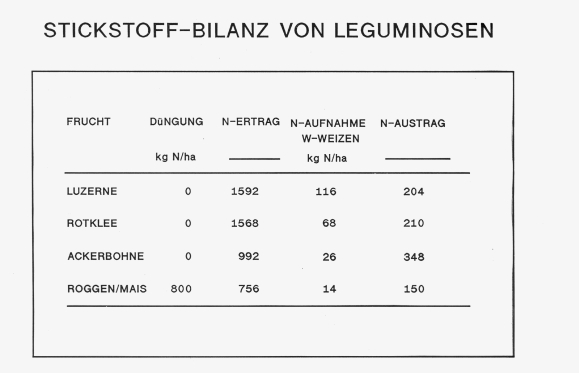
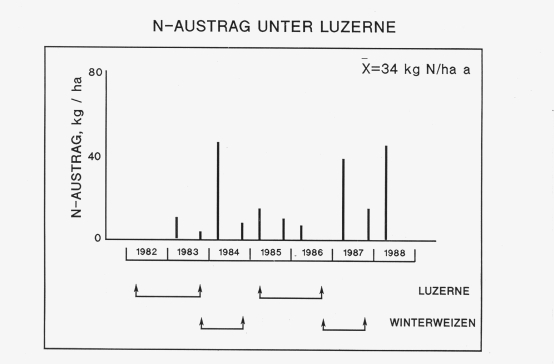
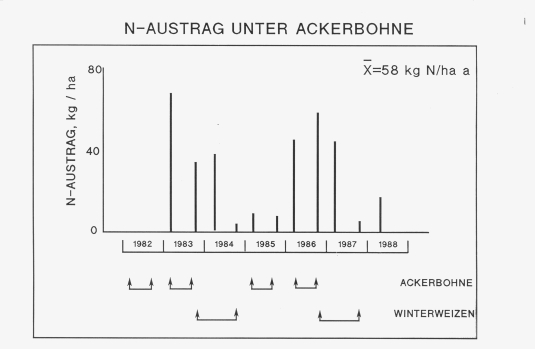
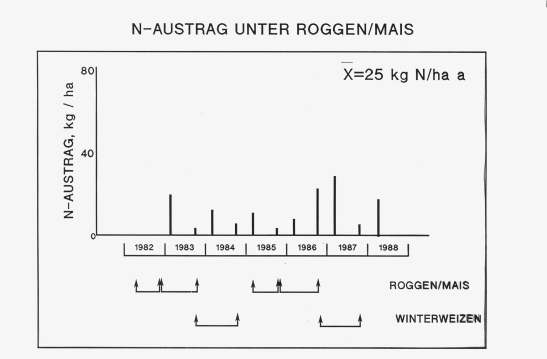
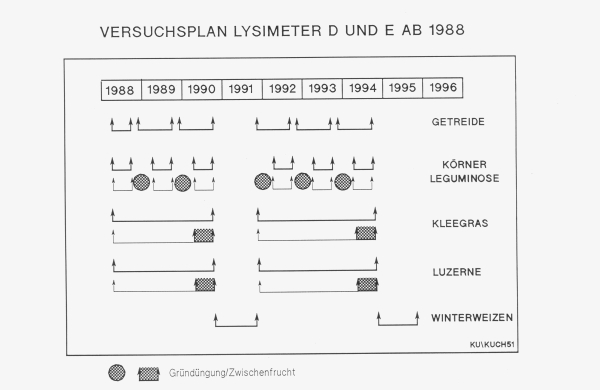
An experiment is presented here that illustrates various sources and sinks for nitrogen
originating
from biological nitrogen fixation (BNF).
Experimental Setup:
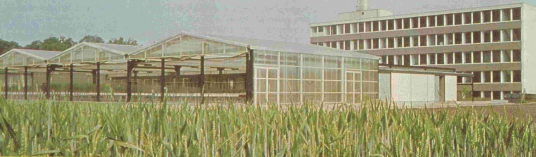
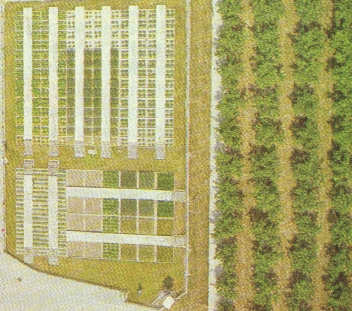
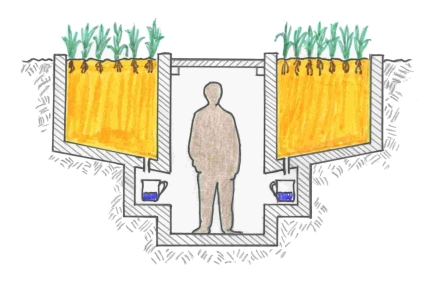
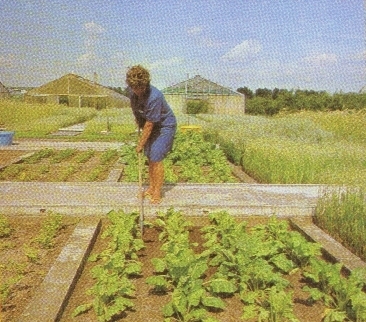
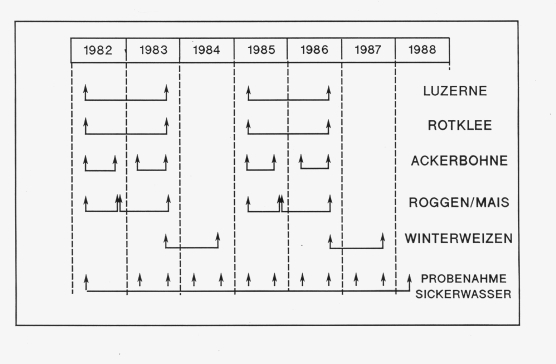
A lysimeter facility was used over several years. The treatments included the cultivation
of grain or
forage legumes, which were compared with a minerally fertilized cereal variant.
Key Experimental Feature:
At the end of each growing period, cereal crops were grown on all plots. This was
done to quantify
the residual nutrient effect of the preceding treatments.
Purpose and Expected Insights:
This design allows researchers to trace the fate of biologically fixed N by measuring:
- Direct N uptake by the legume crop
itself (a temporary sink, later becoming a source via
residues).
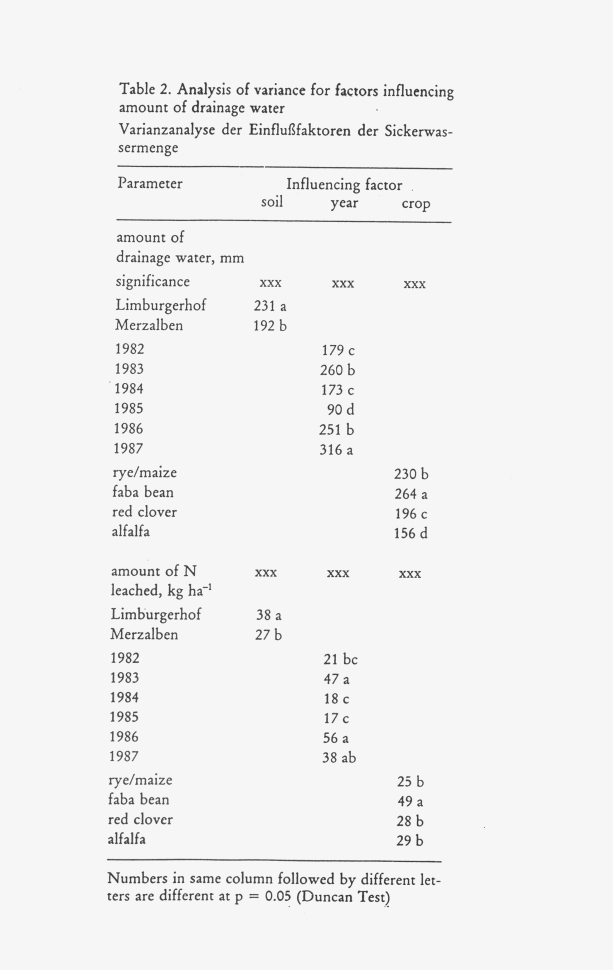
- N losses via leaching (measured
in lysimeter leachate), volatilization, or denitrification (sinks
removing N from the system).
- N accumulation in the soil organic
matter pool (a long- term sink and slow-release source).
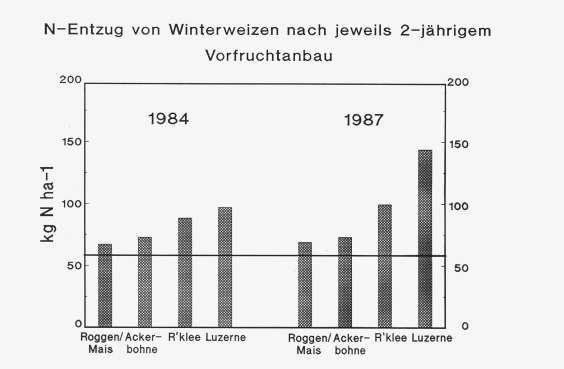
- The residual N effect on the subsequent
cereal crop (a key agronomic source), demonstrating
the practical fertilizer value of the legume.
In essence, this experiment creates a nitrogen mass balance for legume-based systems
versus
fertilized cereal systems, quantifying the major pathways (sources and sinks) for biologically fixed
nitrogen within the soil-plant system.