Water is an odorless, tasteless, and colorless compound of oxygen and hydrogen. Due
to its
dipolar nature, it possesses exceptional physicochemical properties:
- It reaches its maximum density at
+4°C (which is why water at 4°C sinks to the bottom in
standing bodies of water).
- When freezing, water expands its
volume by about 10%; this explains the damaging effects of
freezing water both inside cells and on paved walkways.
- It boils at +100°C at normal atmospheric
pressure.
- The transition from the liquid to
the gaseous phase requires a very high energy input. This heat
of vaporization must be supplied, but it can also be extracted from the surroundings (=>
resulting in evaporative cooling, which is utilized, for example, in high-pressure misting
systems to lower temperatures in greenhouses).
Water in the soil is subject to various forces that make it more or less available
to plants.
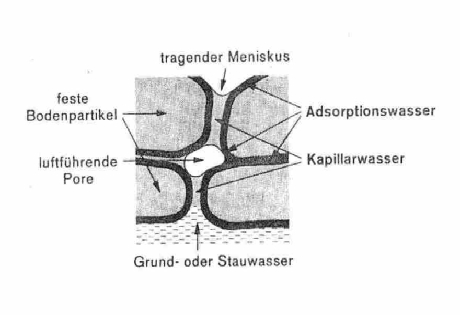
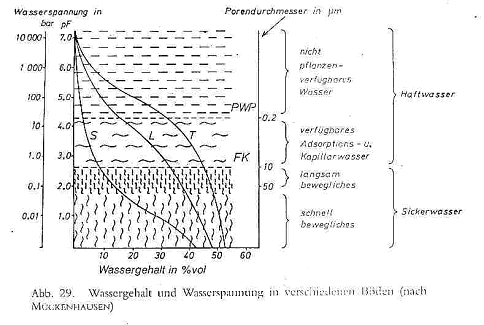
The primary influencing factor is the pore size distribution. This determines whether
water is held
so tightly in very small capillaries that plants cannot extract it. Conversely, soil pores can have
such large diameters that the water is not retained against gravity and drains through the soil.
Consequently, the plant-available water that remains in a given soil volume after precipitation is
characterized by two soil-type-dependent parameters:
- The water content that the plant
cannot further reduce (permanent wilting point).
- The water content that the soil can
retain against gravity (field capacity).
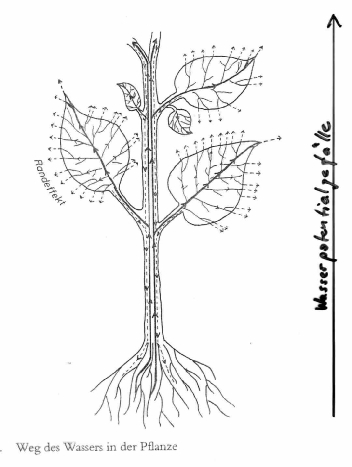
Water is the transport medium within the plant. Water uptake generally occurs via
the roots, driven
by a vapor pressure gradient between the soil and the atmosphere. This process is called
transpiration.
The driving force is primarily the suction
created by the evaporation of water at the
leaf surface (through stomata). The extent of transpiration is largely determined by
the difference in the saturation level of the air between the leaf interior and the
surrounding atmosphere. This pressure differential propagates through the xylem
down to the root cells.
Exceptions to this process include:
- Plants with specialized adaptations, such as bromeliads with well-developed
leaf funnels and other epiphytes, which can absorb water primarily through their
leaf surfaces.
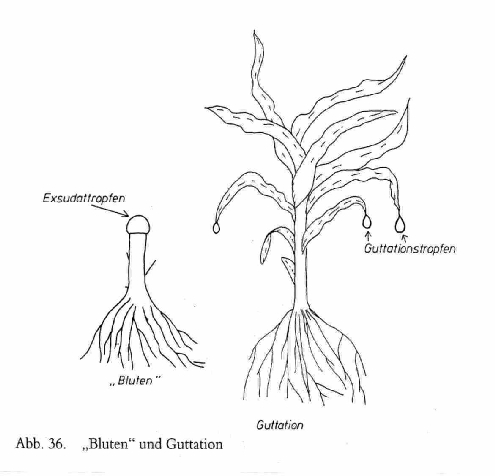
- Plants that, through the phenomenon of root pressure, can "push" water
into the
shoot even when the surrounding atmosphere is saturated with water vapor.
This water emerges at the ends of the vascular tissues as guttation droplets
(often observed during cutting propagation under plastic film).