The path to obtaining a soil or substrate analysis result consists of several steps:
- Sampling
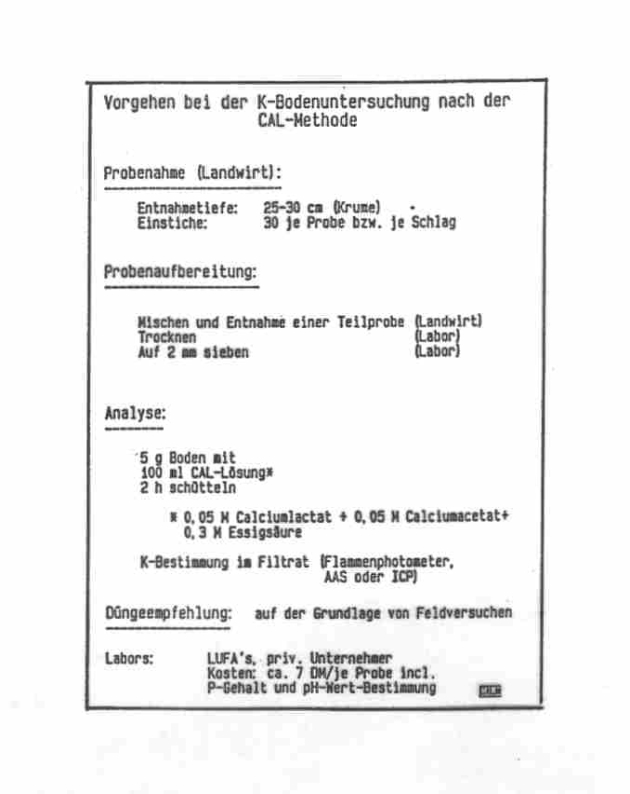
- Sample Preparation/Shipping
- Sample Extraction
- Chemical Analysis
- Evaluation & Derivation of Recommendations
Detailed instructions for each step are available from providers of the "soil
analysis" service (such
as LUFA [Agricultural Analysis and Research Institutes] and private laboratories). Some providers
offer a complete package from sampling to the final recommendation.
Sampling
Sampling of soil in the field: The most critical step is almost always
sampling.
Here's why:
All subsequent steps (sample preparation, extraction, chemical analysis) are carried
out under
standardized laboratory conditions, are highly precise, and controllable. If an error occurs here, it
usually only affects that specific sample.
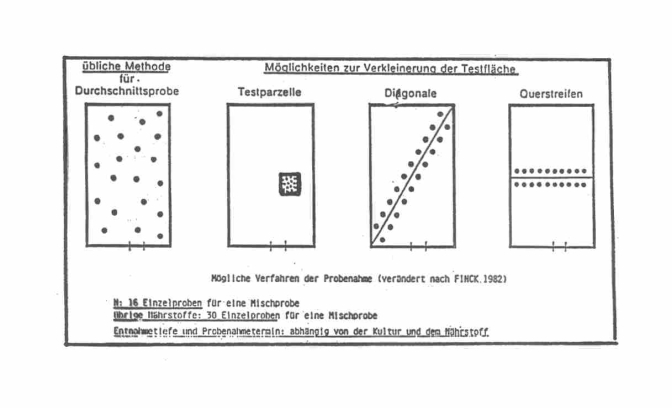
Possible field sampling schemes:
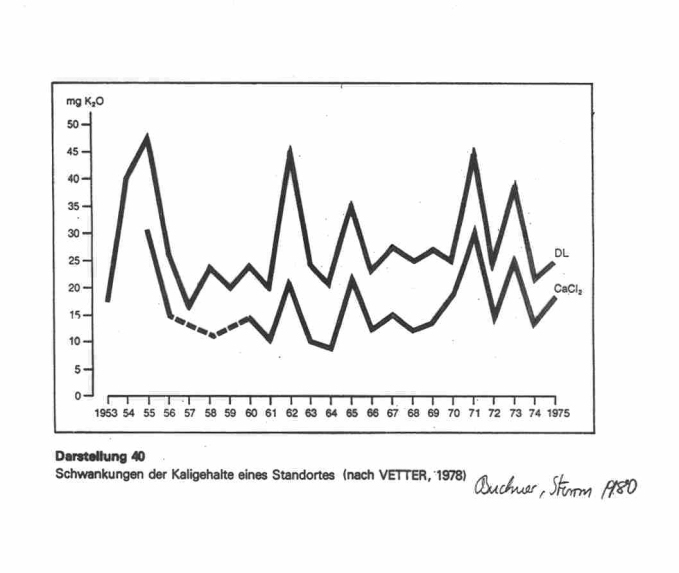
There are research articles available on the subject of sampling schemes, including
sampling
depth, size of the sample, and frequency of sampling as this influences the final result, e.g.
extracted nutrient from the sample. As a rule of thumb, the number of subsamples from an area
combined in one sample which is processed further, is the most important step determining the
quality of the result.
Sampling from a container: This is straightforward when the goal is to
obtain an average value:
thoroughly mix the entire contents of the container and take a subsample for analysis. However, if
investigating the cause of damage to roots or shoots, it may be due to an uneven distribution of
nutrients or contaminants within the container. A composite sample taken using the method
described above would mask these differences. In such cases, it is better to sample from specific
compartments of the container (e.g., horizontal layers, wedge-shaped sections, etc.) and analyze
them separately.
Sample Preparation / Shipment
Samples are typically sent or collected in a field-moist state. In the laboratory,
they are
homogenized (sieved), dried (for P, K analysis), and a subsample (for N, P, K) is taken to
determine nutrient content representatively.
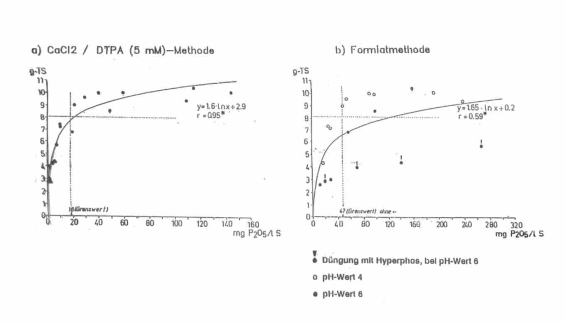
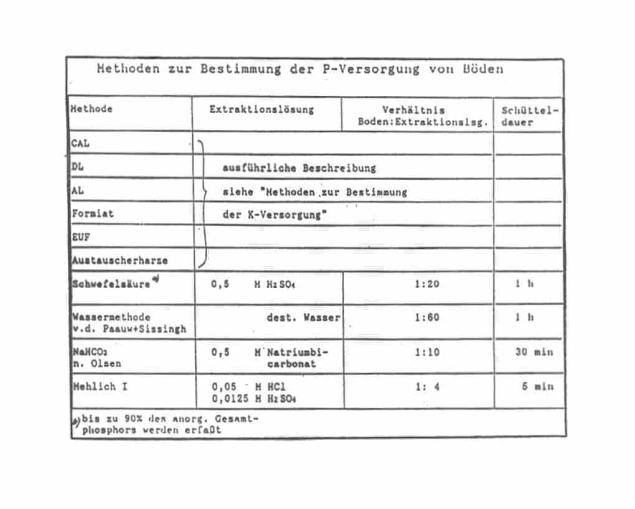
Extraction
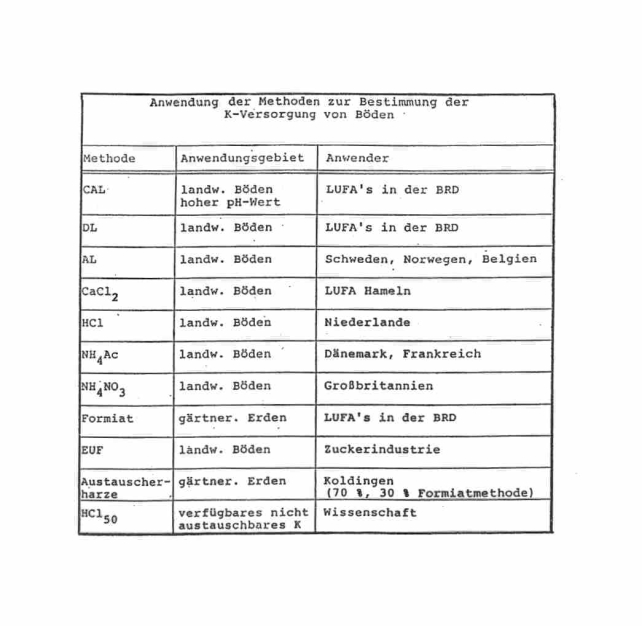
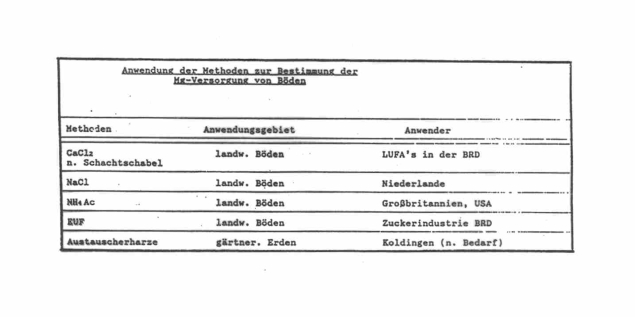
The subsample is mixed with an extraction solution (salts of organic acids, inorganic
acids, or
neutral salt solutions) in a specific ratio, shaken for a defined period, and then filtered.
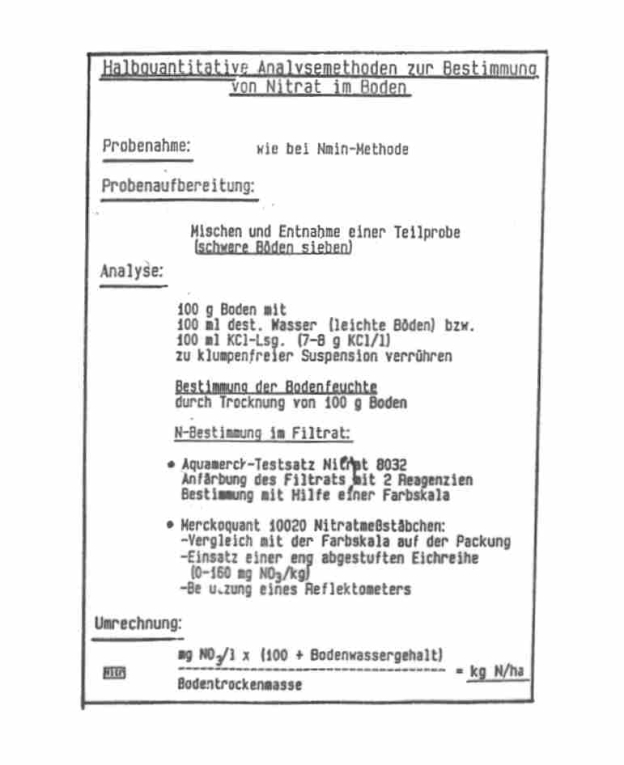
Chemical Analysis
The concentration of nutrients in the filtrate is usually determined using photometric
methods. The
result is then back-calculated to the nutrient content of the weighed subsample.
Interpretation
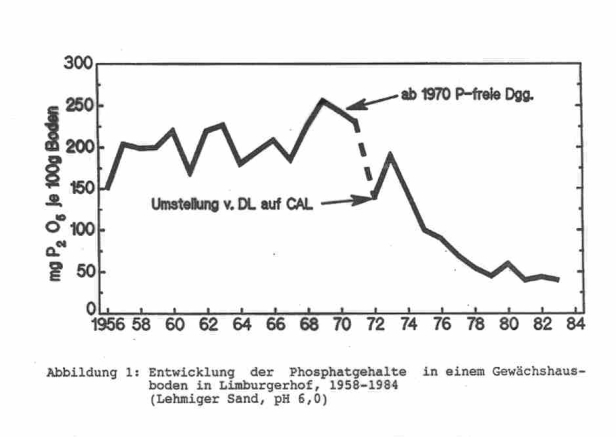
The analysis result is reported in mg/100g soil (P, K), mg/liter (substrate), or sometimes
as kg/(ha
soil layer) (N).
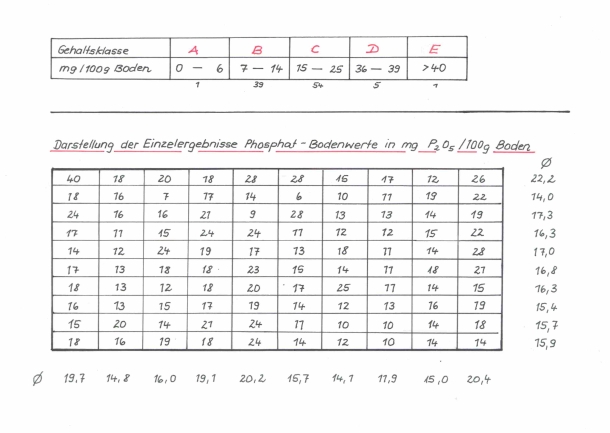
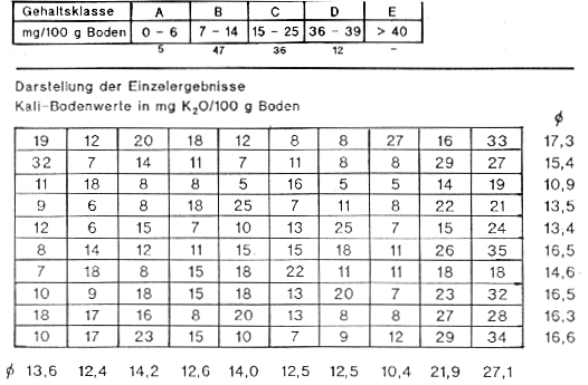
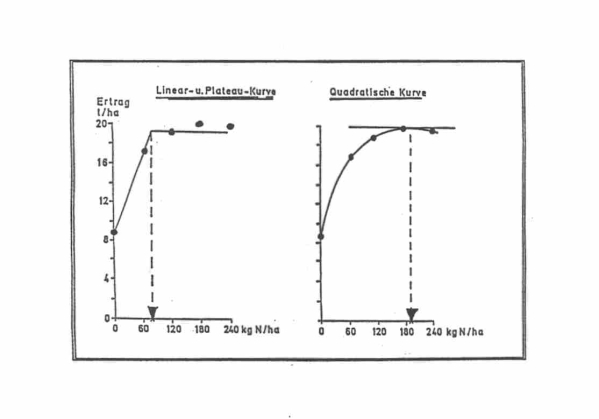
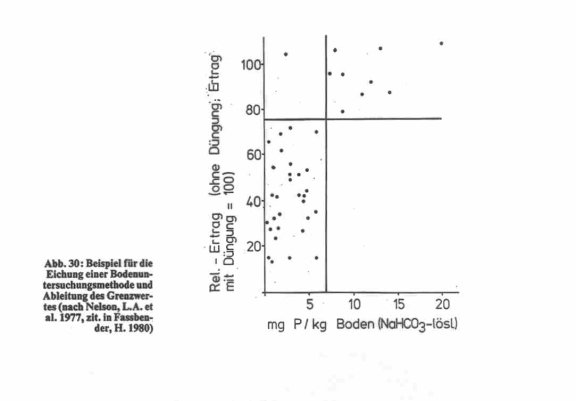
For soil analysis of P and K, the results are classified into content categories,
and fertilization
recommendations are derived from reference tables, taking soil type into account if necessary.