|
start
>
8. How to Change Plant Nutrient Status
>
8.2 Direct Measures
>
8.2.3 Liquid
|
 back
forward
back
forward 
|
|
|
|
|
The application of fertilizer in liquid form (with the exception of foliar fertilization
and localized
fertilizer application) is always carried out in conjunction with an irrigation measure. Simple
(sprinklers) or more advanced irrigation systems can be used for this. The difference lies in the
precision of applying the water and nutrient amounts.
For defining (narrowing) the concentration range of the nutrient solution, the concentration
concept
has proven effective |
|
Main Application Methods (Field Use):
Fertigation (Application via Irrigation Systems):
- Drip/Trickle Irrigation: Precise,
localized placement of nutrients in the root zone. Maximizes
efficiency and minimizes losses (leaching, volatilization). Common in high-value crops
(vegetables, orchards, vineyards).
- Center Pivot/Sprinkler Systems: Broadcast
application over large areas. Good for top-dressing,
but less efficient than drip due to potential foliar interception, evaporation, and runoff.
- Broadcast Spraying (Top-Dressing):
Spraying liquid fertilizer (often UAN or liquid NPK blends)
directly onto the soil surface or the crop canopy. Most common for nitrogen side-dressing in
cereals (e.g., wheat, corn). Risk of nitrogen loss through volatilization if not incorporated.
Common Liquid Fertilizers for Field Use:
- UAN (Urea Ammonium Nitrate Solution):
A 28% or 32% nitrogen solution. The most widely
used liquid N fertilizer in field crops. Can be knifed-in, banded, or applied via fertigation.
- Liquid Urea: Less common than UAN,
highly susceptible to volatilization losses if surface-
applied without incorporation or inhibitors.
- Ammonia Solutions: Aqua ammonia or
ammonium hydroxide. Must be injected to prevent
massive nitrogen loss.
- Liquid NPK (Suspension or Clear Liquid
Blends): Custom blends of N, P, K, and sometimes S
or micronutrients. Often used in starter fertilizers or in fertigation programs for high-value crops.
- Liquid Potassium (e.g., Potassium
Thiosulfate - KTS): Used in fertigation, especially where
chloride sensitivity is a concern.
Advantages for Field Use
- Uniformity & Precision: Easier
to achieve even distribution compared to dry spreaders,
especially with injection or fertigation.
- Timeliness & Speed: Can be applied
quickly over large areas. Ideal for in-season top-dressing
when timing is critical.
- Flexibility: Easy to blend and adjust
formulations. Well-suited for variable rate application
(VRA) using GPS and soil/plant sensor data.
- Starter Fertilizer: Excellent for
placing a small amount of nutrients (especially P) close to the
seed at planting to boost early growth.
- Integration with Crop Protection:
Can sometimes be tank-mixed with certain herbicides or
pesticides (requires strict compatibility checks).
Disadvantages / Considerations:
- Logistics & Cost: Requires specialized
equipment (tanks, pumps, injectors, sprayers), higher
energy for transport (mostly water), and often higher cost per unit of nutrient.
- Volatilization Risk: Surface-applied
urea-based liquids (UAN, urea) can lose significant nitrogen
as ammonia gas if not incorporated by rain, irrigation, or injection.
- Leaf Burn (Phytotoxicity): Risk of
foliar damage if sprayed directly on plants, especially in hot,
sunny conditions or with high salt-index fertilizers.
- Corrosion & Safety: Some liquids
(e.g., UAN) are corrosive to equipment and require careful
handling and storage.
- Limited Soil Incorporation: Broadcast
applications rely on rainfall for incorporation, which can
be unpredictable.
Key Trends (Precision Agriculture Integration):
- Variable Rate Application (VRA):
Applying different rates across a field based on soil maps,
yield maps, or real- time sensor data (e.g., optical crop sensors). Liquid systems are highly
adaptable to this.
- Y-Drop or 2x2 Placement: Precise
placement of liquid fertilizer 2 inches to the side and 2
inches below the seed (or beside the row) to maximize nutrient availability while avoiding salt
damage to seedlings.
- Use of Stabilizers: Adding urease
or nitrification inhibitors (e.g., NBPT, DCD) to liquid urea or
UAN to reduce nitrogen losses from volatilization and leaching.
In summary, liquid fertilizers are a versatile and efficient tool in modern field
crop production,
particularly valued for their suitability for precise, timely applications and integration into high-tech,
precision farming systems. |
|
In greenhouse cultivation, production occurs either in soil (enhanced with additives
like compost,
manure, etc.) or in substrates. Depending on the system used, the available substrate volume per
plant—and consequently the storage capacity for nutrients and water—varies greatly.
This primarily
influences:
- The frequency of irrigation cycles,
and
- The operational reliability/risk
of production disruption.
This is because: with low storage capacity, the failure of an irrigation pump is more
problematic
than with high storage capacity. |
|
Produktionssysteme mit (inertem) Substrat
Beetanbau
Sack und Damm
Steinwolle
|
|
Hydroponic systems are characterized by the fact that the substrate, as the site for
plant
anchorage and root nutrient uptake, is largely replaced by water. In German vegetable production,
hydroponic methods have so far been of minor importance. However, in other countries (e.g., the
Netherlands), they are among the most efficient production methods in terms of marketable yield
per unit of greenhouse area.
Due to their low storage capacity for water and the nutrients contained within, these
systems place
high demands on:
- Technical operational reliability,
- Technical and horticultural know-how,
and
- Hygiene within the operation, because
of the rapid movement of water through the entire
system.
Given access to suitable water, hydroponic systems can also be operated as closed
systems, i.e.,
without discharging water from the operation. |
|
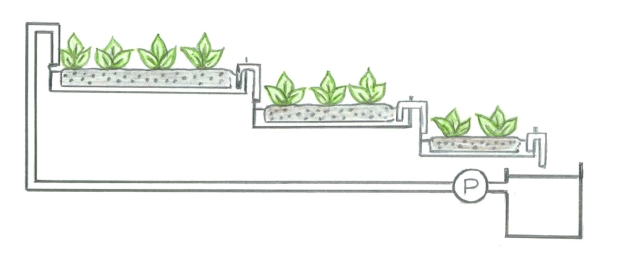
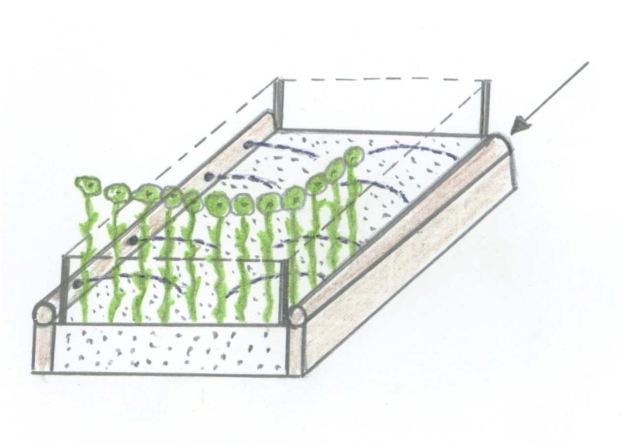
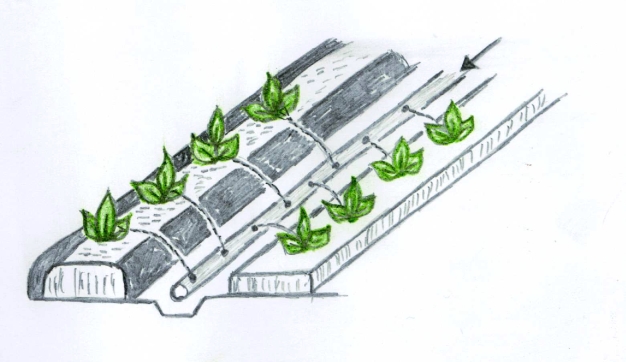
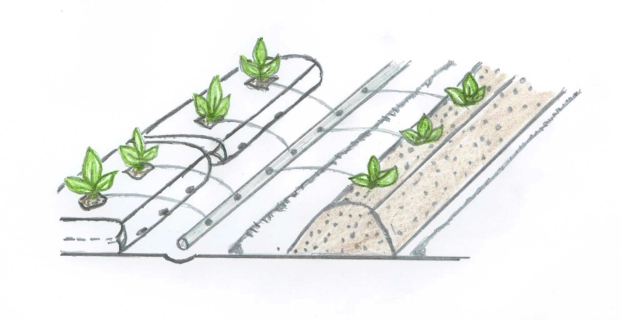
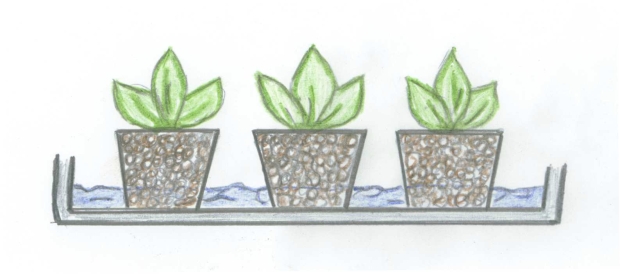
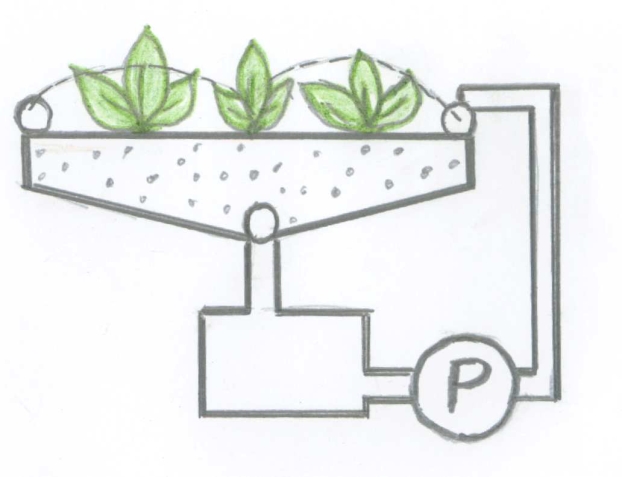
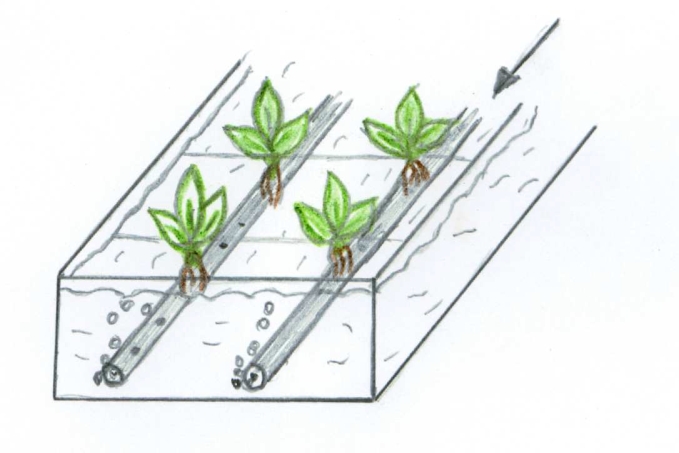
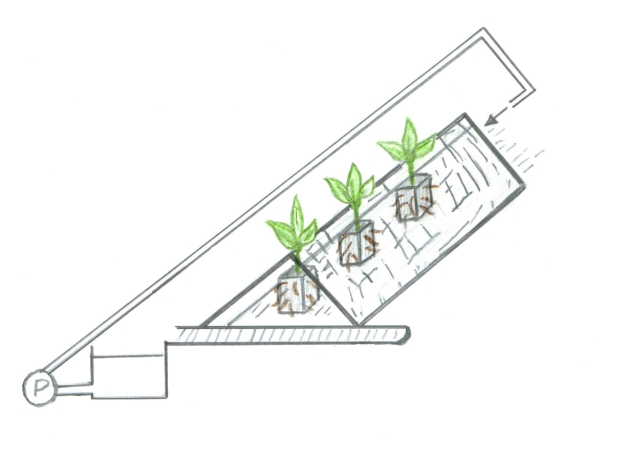
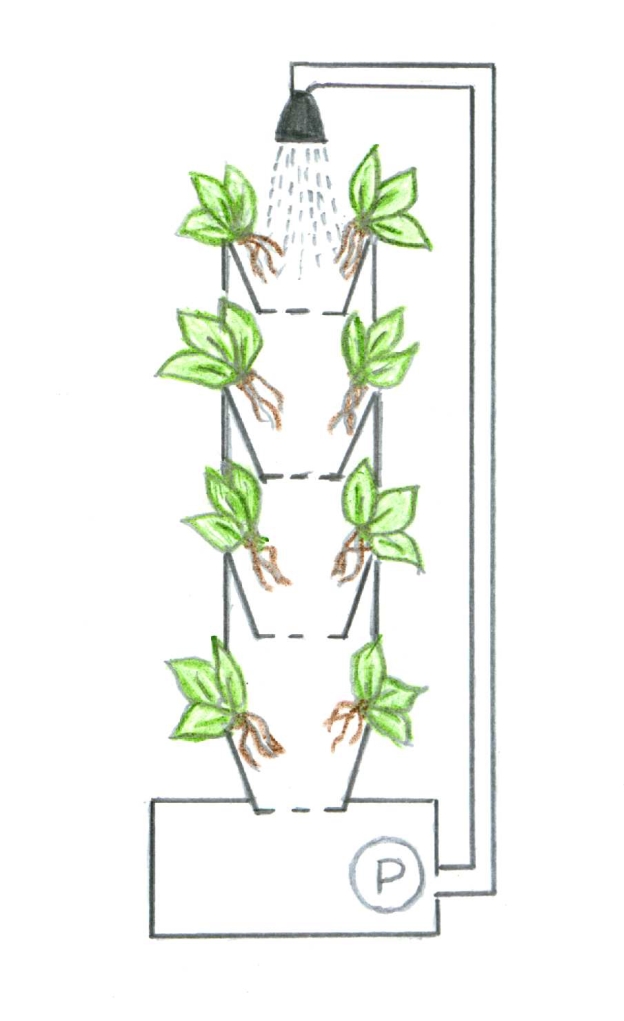
Production Systems
Pot-Hydroponics
Flooding/Drainage in a gravel bed
Tank system
Nutrient Film Technique
Nutrient solution spray system / Mist system. (aeroponic system)
|
|
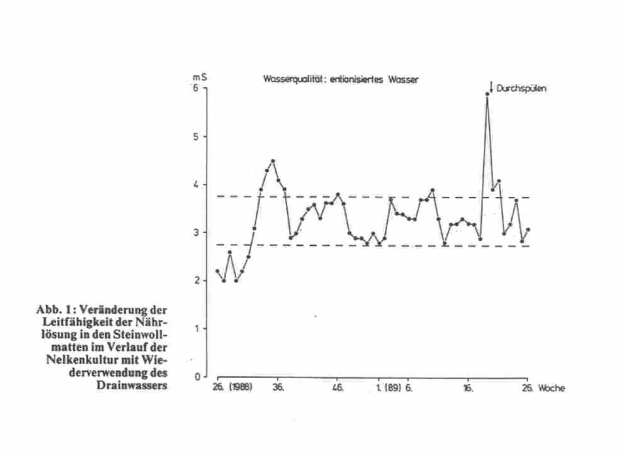
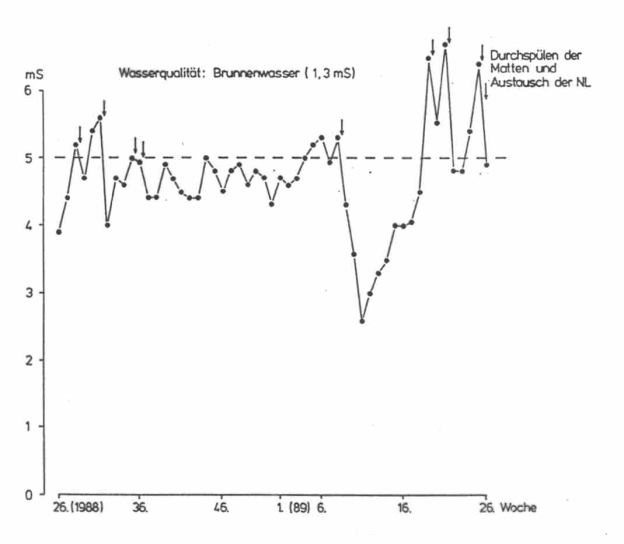
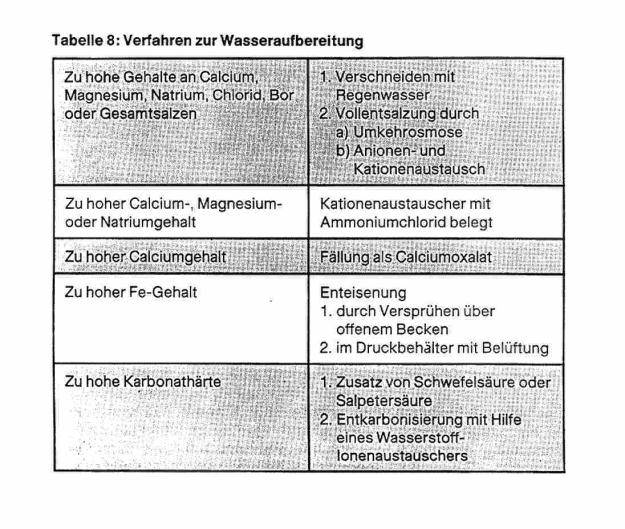
Closed systems, i.e., systems with recirculating
nutrient solution, are only feasible if
the source water quality allows for the preparation of a nutrient solution with a low
total concentration (osmotic potential, salt content, electrical conductivity).
|
|
The efficiency of foliar fertilization depends on:
- The penetration of the ion through
the cuticle,
- Its transport across membranes into
the leaf cell, and
- The transport of the ion in the phloem
and xylem.
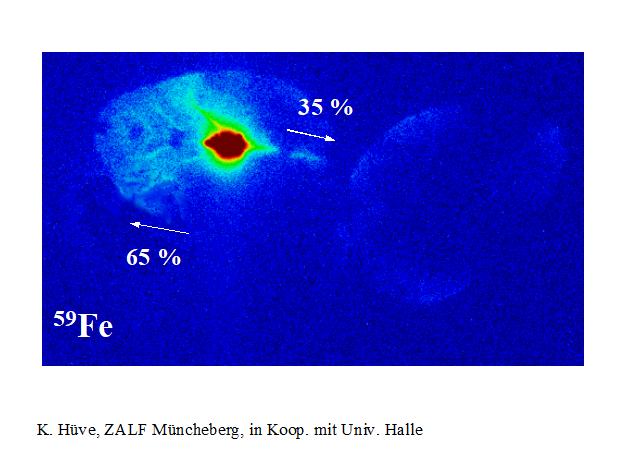
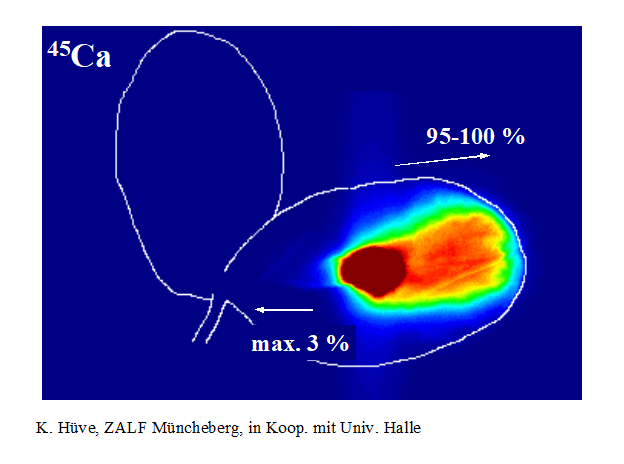
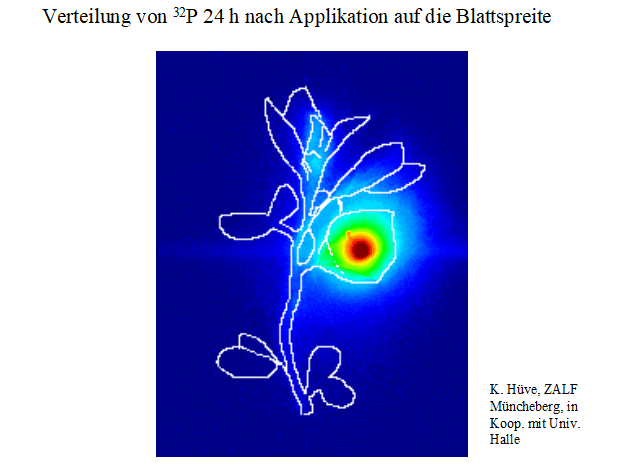
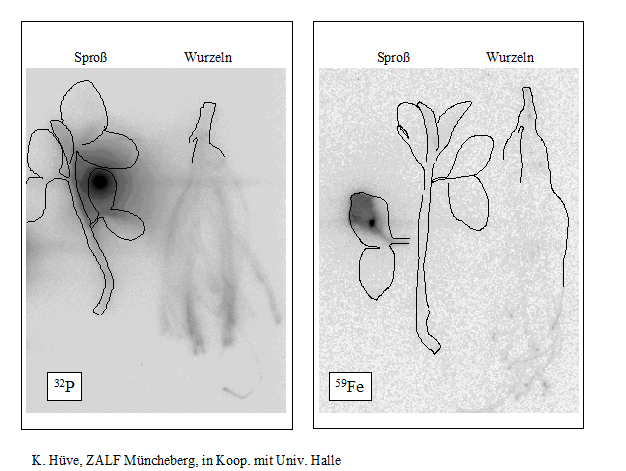
First, here are some images (radiograms) showing the distribution of nutrient ions
applied to the
leaf of a faba bean (Dr. Hüve, ZALF). Each case shows faba bean (Vicia faba); the distribution
within the two leaves was recorded after 2 hours, and within the plants after 24 hours.
Important: All percentages are calculated with: absorbed tracer = 100%. Estimating
what
percentage of the applied tracer was actually absorbed is difficult, as distinguishing between tracer
residue at the application site and absorbed tracer is challenging.
|
|
|
|
|