(Quantitative or semi-quantitative) chemical analysis of plants (or plant parts) aims
to determine
whether nutrients in the plant tissue (dry or fresh) are present in a concentration range that allows
for normal growth and development.
Grundlagen
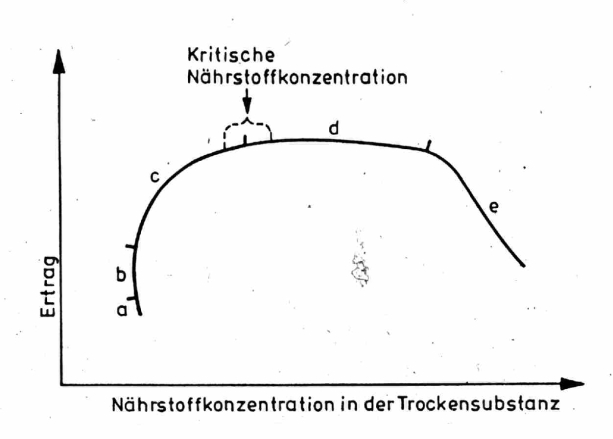
In Germany, the relationship between nutrient concentration and yield is divided into
5 zones (see
also the section "Symptoms"):
a) Zone where yield increases while concentration decreases. This is known as the
Steenberg
effect, occurs only under severe deficiency, and is thus a rare special case without practical
significance.
b) Zone where yield increases at an almost constant concentration. Here, the growth
rate is
controlled (limited) by nutrient supply, and deficiency symptoms may appear.
c) Zone of latent deficiency. Yield increases with rising plant concentration and
reaches a critical
concentration at the border of maximum yield. This concentration value is called the yield threshold
value. Concentrations above this threshold are either:
d) Sufficient or optimal and do not influence yield, or
e) Too high, leading to toxicity and yield reduction.Bei
der Interpretation von
Analysenergebnissen geht es also darum herauszufinden, in welchem Bereich der
Kurve sich eine Pflanze befindet.
Procedure
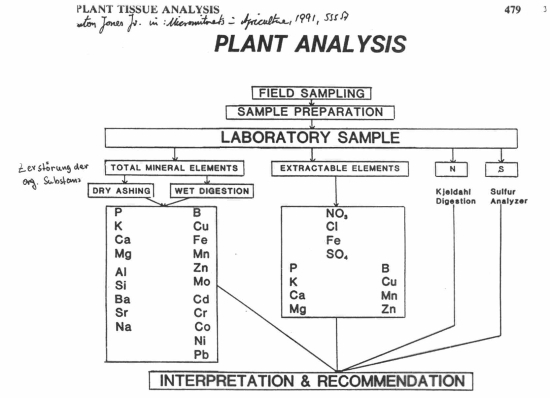
Analogous to soil analysis, the procedure for plant analysis consists of a series
of sequential
steps, starting with sampling and ending with the interpretation of the analysis result. These steps
are summarized in the diagram below.
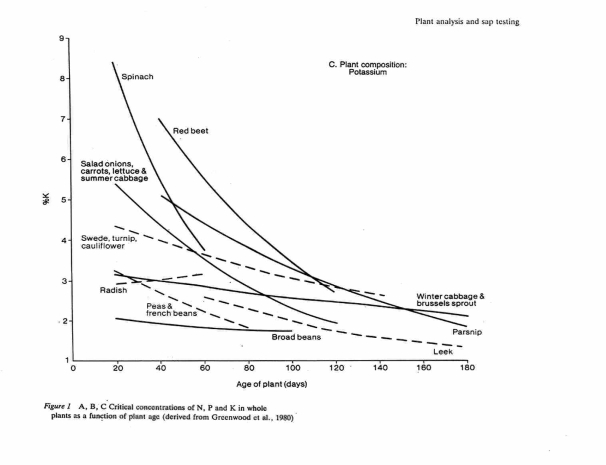
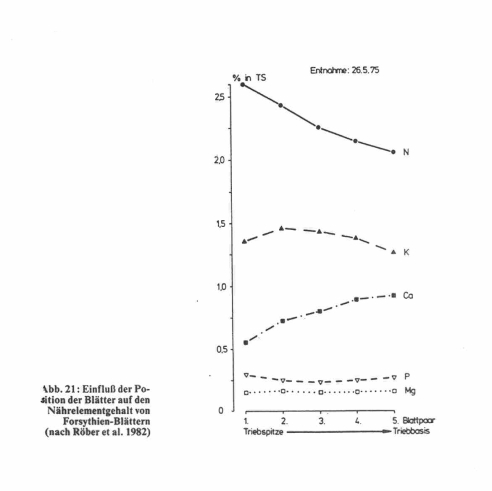
During growth, the critical concentrations in plant tissue change (see below). Furthermore,
they
differ among various plant organs. This has led to the development of very detailed descriptions and
instructions for selecting plants/plant parts for plant analysis, which must be followed to obtain
interpretable results.
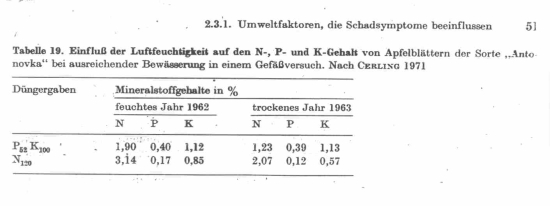
In dry and wet years, the nutrient contents [in plants] can differ even on the same
soil. This can be
attributed to the varying conditions for nutrient transport through the soil to the plant root (see
Mass
Flow and Diffusion).
Interpretation
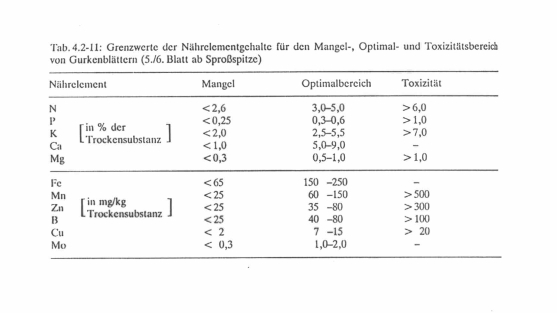
There are extensive tabulated references for the nutrient sufficiency ranges of all
major crops.
These are often specific to certain plant parts. Caution is therefore required when applying these
tables if all necessary information is not available (e.g., tables from other countries,
etc.).